
Do I Need a Doula? What They Really Do (and Don’t Do) in the Birth Room
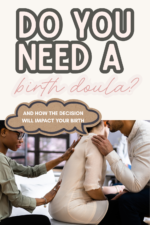
You’re planning for birth, maybe bingeing alllll the Instagram reels, and somewhere along the line someone says, “You have to get a doula!” And now you’re wondering—wait…do I need a doula?
The truth is, the idea of hiring a doula can feel exciting for some and overwhelming for others. Maybe you’re craving more support. Maybe you’re already feeling crowded with your partner, nurse, and provider. Or maybe you’re just not sure what a doula actually does—and if it’s something you need in the first place.
In this post, we’re breaking it all down. What doulas do (and don’t do), how they’re different from doctors, midwives, or even labor coaches, and most importantly—how to know if a doula is the right fit for you.
Let’s get into it.



Wondering who I am and why I'm giving advice? I'm a mom of three and a labor and delivery nurse. I've assisted in thousands of births and helped countless women on their journey to an empowered motherhood journey. I want to bring my knowledge and genuine mom advice to you. I'm so glad you're here. If you're looking for someone to talk to or lean on in this new mom life, I'm your girl.
Do I Need a Doula? What a Doula Actually Does
What Is a Doula, Really?
Let’s clear something up: a doula is not a medical provider. She’s not going to catch your baby or monitor your contractions on a screen. What she will do is offer unwavering support—from early labor all the way through that first magical cry…and sometimes well into postpartum as well.
A birth doula is a trained professional who provides emotional, physical, and informational support before, during, and shortly after childbirth. Think of her as your steady, grounded presence in the room. She might offer counter-pressure during contractions, help you change positions when what you're doing just isn't working, suggest breathing techniques when you're feeling overwhelmed, or simply remind you how strong and capable you are when things get intense.
The role of a doula isn’t to tell you what to do, but to support the decisions you’ve already made. She’s your birth-side cheerleader and a calming anchor when everything else feels like a whirlwind.
And one of the biggest benefits? A doula stays with you. While nurses may change shifts and doctors come and go, a doula is often the most consistent person by your side. That continuous presence can make a huge difference in how supported and seen you feel.
Tools your doula might help you use:

What a Doula Is Not
Now that we’ve covered what a doula is, let’s talk about what she’s not—because this is just as important.
A doula is not a medical provider. That means she doesn’t perform cervical checks, diagnose complications, suggest medications, or make decisions for you. If a doula tries to step into a clinical role—like telling you whether or not you’re in active labor, advising you to decline certain tests, or offering to check your cervix—that’s a red flag. Run. Fast.
A doula should never replace your nurse, doctor, or midwife. She’s not there to manage your health; she’s there to support your experience. Her job is to help you feel safe, informed, and emotionally grounded, not to “take over” your birth plan or speak on your behalf.
And while some doulas may have strong opinions about birth choices (who doesn’t?), the right one will always respect your choices—no judgment, no pressure. Whether you want an epidural at 4 cm or plan to labor at home for as long as possible, your doula should meet you right where you are.
Bottom line: A doula supports you, not a particular kind of birth.
Do You Need a Doula or Is Your Birth Team Enough?
Doula, Midwife, Doctor, Nurse, Birth Coach—Who’s Who?
If you’ve ever felt confused trying to figure out who does what in the birth room…you’re not alone. It’s a lot, especially when you’re hearing terms like midwife, doula, OB, labor nurse, and birth coach tossed around like everyone just knows the difference. So let’s break it down.
Doula
- Provides emotional, physical, and informational support.
- Non-medical. No exams, no monitoring, no prescriptions.
- Helps you stay calm, confident, and informed during birth.
- Think: grounding presence, hip squeezes, and steady encouragement.
Midwife
- A medical provider trained to care for healthy, low-risk pregnancies.
- Can deliver babies in hospitals, birth centers, or at home.
- Monitors baby and parent’s health, performs exams, prescribes medications if needed.
- Think: hands-on medical care with a more holistic, low-intervention vibe.
OB/GYN (Doctor)
- A medical doctor specializing in pregnancy, labor, and delivery.
- Often oversees higher-risk pregnancies and performs C-sections.
- Typically present at the very end of labor (pushing/delivery).
- Think: medical expertise and surgical backup.
Labor & Delivery Nurse
- Monitors your vitals and baby’s heart rate.
- Handles charting, medications, and coordinating care with your provider.
- Might coach you during pushing, but may also be caring for multiple patients.
- Think: clinical support with moments of emotional encouragement.
Related Read: 8 Things Your Labor and Delivery Nurse Wants You To Know About Having A Hospital Delivery
Birth Coach (aka Your Partner, Friend, or Support Person)
- Knows you better than anyone else.
- Offers love, presence, and personal support—sometimes with zero experience.
- Can be incredibly effective when properly prepared (hint hint: birth classes help).
- Think: your person, learning how to show up for you like a pro.
Related Read: Dad's Guide To Labor and Delivery
The truth is, your birth experience is shaped by a combination of these roles—but that doesn’t mean you need every single one in the room. The key is choosing the right mix that makes you feel supported, safe, and empowered.
Finding the Right Doula for You
If you decide that having a doula sounds like your jam, the next step is finding someone who fits—not just professionally, but personally. Because yes, birth is intimate. And you want someone in the room who respects your space, your values, and your vision.
Here are a few tips to guide the search:
Ask the Right Questions
When interviewing doulas, go beyond “Are you available for my due date?” and dig into how they support. Try questions like:
- “How do you handle unexpected changes in a birth plan?”
- “What’s your philosophy on medical interventions?”
- “How do you involve partners in the birth experience?”
- “Can you share an example of a time you supported someone through a tough decision?”
Their answers will give you a sense of how they hold space, not just how many births they’ve attended.
Look for Alignment
The best doula for you is someone who:
- Respects your boundaries.
- Honors your preferences (epidural, unmedicated, hospital, home—you name it).
- Offers evidence-based information—not personal opinions disguised as facts.
- Understands that your partner is a vital part of the team, not someone to push aside.
If you feel judged, pressured, or like you’re being “talked into” a certain type of birth? That’s not your person.
And Trust Your Gut
Seriously. You’ll feel it when you vibe with someone. Birth is one of the most vulnerable experiences you’ll ever have—you deserve to feel emotionally safe with whoever’s supporting you through it.
How to Decide If You Need a Doula
Also…It’s Totally OK Not to Hire a Doula
Here’s the honest truth that no one says loud enough: you do not need a doula to have a beautiful, empowered birth.
Yes, doulas can be amazing. But they’re not a requirement for confidence, calm, or control. In fact, if you’re taking a solid, evidence-based childbirth class, you and your support person can absolutely rock birth together—just the two of you and your care team.
What matters most is that you feel:
- Informed about your choices.
- Prepared to advocate for yourself (or have your partner do it).
- Supported in the way you want to be supported.
And sometimes, that means not having anyone else in the room. No extra voices, no distractions, just you, your partner, and your baby.
For so many families, that’s exactly the vibe they want: intimate, focused, and empowered from the inside out.
If you’re learning tools like labor positions, breathwork, decision-making frameworks, and how to work as a team before the big day? That’s powerful. That’s preparation. That’s the kind of support that lasts beyond one day of birth—and that’s exactly what The Empowered Birth Academy was created for.
👉 Want to feel calm, confident, and fully prepared—with or without a doula?
Click here to learn more about The Empowered Birth Academy.
It’s the childbirth class that helps you and your partner become your own best birth team with or without a doula.

Final Thoughts: You Get to Choose Your Birth Team
At the end of the day, this is your birth. And whether you choose to hire a doula, go solo with your partner, or gather a full support squad, you deserve to feel empowered in that choice.
A doula can absolutely enhance your experience—but you’re not “missing out” if you decide it’s not for you. With the right preparation, the right mindset, and support that aligns with your values, you already have what you need to birth with confidence.
So take a deep breath, trust your instincts, and build the birth team that feels right in your heart—not just what Instagram or your neighbor or your second cousin says you should do.
And if you ever need a guide, a pep talk, or a place to learn the real tools that make a difference? I’ve got you.
Did you hire a doula? Share your experience below!