

How to Get Your Baby to Sleep Longer Stretches: 7 Simple Yet Powerful Tricks

Every parent dreams of longer, uninterrupted sleep—not just for their baby, but for themselves too. The early months (and even years) of parenting often come with sleepless nights and short naps, leaving parents wondering, “How will I ever get my baby to sleep longer stretches?”
The truth is, babies have unique sleep needs that evolve as they grow, but there are proven strategies that can help extend their sleep both at night and during the day. In this guide, we’ll share seven simple yet powerful tricks to help your baby sleep longer stretches, whether it’s during their nighttime rest or daytime naps. These tips are designed to set your baby up for more restful sleep and give you the peace of mind you deserve, and I can attest that they have helped me achieve good sleep with all three of my own babies.


Wondering who I am and why I'm giving advice? I'm a mom of three and a labor and delivery nurse. I've assisted in thousands of births and helped countless women on their journey to an empowered motherhood journey. I want to bring my knowledge and genuine mom advice to you. I'm so glad you're here. If you're looking for someone to talk to or lean on in this new mom life, I'm your girl.
1. Establish a Consistent Sleep Schedule
Babies thrive on predictability, and a consistent sleep schedule is one of the best ways to regulate their internal clock. Setting regular wake-up times, nap times, and bedtime helps your baby understand when it’s time to rest and when it’s time to play.
Start by observing your baby’s natural sleep patterns over a week. Once you notice a pattern, create a schedule around their biological rhythms. For example, if your baby typically wakes at 7:00 AM, aim for naps and bedtime to align with their wake windows (more on that later) starting at that time.
Consistency is key. Following a similar routine every day helps your baby feel secure and makes it easier for them to drift off to sleep—and stay asleep longer.
Related Read: The EASY Baby Sleep Routine That Will Save Your Sleep

2. Create an Optimal Sleep Environment
Your baby’s sleep environment plays a crucial role in how long they stay asleep. A dark, quiet, and comfortable room encourages deeper, more restful sleep.
- Darkness: Use blackout curtains to block out natural light during naps and bedtime. Darkness signals your baby’s brain to produce melatonin, the hormone that promotes sleep.
- White Noise: A white noise machine can drown out household sounds and mimic the soothing environment of the womb.
- Temperature: Keep the room cool and comfortable, ideally between 68-72°F (20-22°C). Dress your baby in breathable sleepwear to prevent overheating.
By optimizing their sleep space, you can create the perfect conditions for your baby to sleep longer stretches.
3. Address Hunger Before Sleep
A full tummy can make all the difference in helping your baby sleep longer stretches, especially at night. For younger babies, ensure they’ve had a good feed throughout the day and immediately before bedtime. When you ensure that your baby is nursing every 2-3 hours throughout the day and on demand, they will have achieved most of their caloric needs before bedtime and will need to wake less frequently out of hunger.
Free Printable
Sign Up To Get The Free Baby Registry Checklist Sent Straight to your inbox
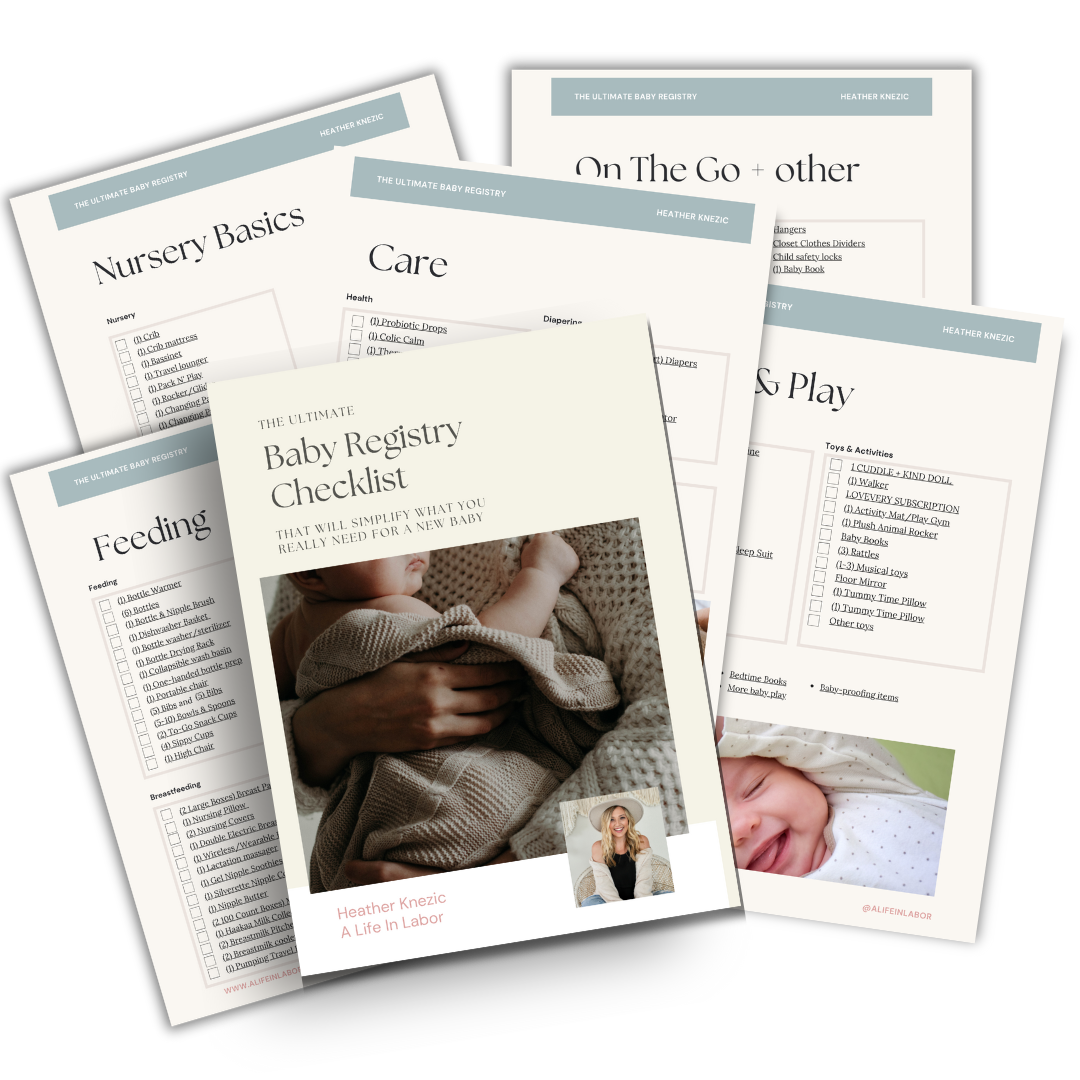
From a labor nurse and mom of 3—find my favorite baby products to make the baby stage as easy and smooth as possible without the overwhelm.

Some families also benefit from dream feeding—offering a feed right before you go to bed. This helps reduce overnight wake-ups by “topping them off” with milk after they've gone to bed for the night, but before you've gone to bed yourself. For example, if you usually put your baby down for bed at 8pm and they typically wake up around 11 pm or 12 am for their first overnight feeding, you would implement the Dream Feed at 10:30 pm by picking them up out of their bed, feeding them while they are still drowsy or asleep, and placing them back down for sleep without waking them or stimulating them too much. Once the Dream Feed is complete, you head to bed yourself to get your longest stretch of sleep of the night.
As your baby grows and starts eating solids, balance their daytime intake of milk and solids to keep them satisfied. Offer nutrient-rich meals during the day to ensure they’re getting the energy they need and aren’t waking up hungry at night, but don't remove or significantly reduce their intake of milk as if the food is replacing milk for their nutrition. Milk is still their main source of sustenance, and food should be in addition to meeting their milk requirements. And keep in mind that you'll want to avoid introducing heavy or new foods right before bedtime, as they could disrupt sleep instead of promoting it.
Related Read: Mastering the Dream Feed: The Secret to Longer Sleep for You and Your Baby
4. Encourage Self-Soothing Skills
Babies who can self-soothe are more likely to sleep longer stretches because they can settle themselves back to sleep if they wake during the night. Teaching self-soothing doesn’t mean just letting your baby cry—it’s about gradually giving them the tools to feel secure and calm on their own.
Sleep associations are in fact, not crutches but tools to help your baby fall back to sleep after waking in completely age-appropriate ways and will certainly not create “bad habits” that keep you up at night (when used correctly). Appropriate and helpful sleep associations that can encourage your baby to fall back to sleep easily after waking can be:
- Nursing to sleep
- Using a lovey (if only used for soothing and not for play)
- Using a pacifier (if used exclusively for sleep and never during wake times)
- White noise
- The same pattern of activities that happen each time sleep is coming
Start allowing your baby to self-soothe by putting your baby down drowsy but awake at bedtime and nap time with their appropriate sleep associations in place. This allows them to associate their sleep space with falling asleep independently. Over time, they’ll learn to fall back asleep during brief night wakings without needing intervention.
Related Read: How To Get Your Newborn To Sleep Well Right From The Start

5. Pay Attention to Wake Windows
Understanding and respecting your baby’s wake windows can make a huge difference in their sleep quality. A wake window is the amount of time your baby can stay awake between naps or before bedtime without becoming overtired.
Age-appropriate wake windows vary:
- Newborns: 45-60 minutes.
- 3-6 months: 1.5-2.5 hours.
- 6-12 months: 2.5-3.5 hours.
If you're anything like me when I was a first-time mom, you might think that 45-60 minute wake time for newborns is ridiculous and unachievable. But let me assure you that if you make an effort to keep these wake windows, you will see the sleep benefit for your baby. Keeping your baby awake too long can lead to overtiredness, making it harder for them to fall asleep and stay asleep. Conversely, putting them down too early may result in shorter naps. Finding the sweet spot within their age-appropriate wake window can help them sleep longer stretches.
You'll be able to find your baby's ideal time to start the nap or bedtime routine within the wake window time frame by watching for sleepy cues. It's important not to miss these sleepy cues as they can sometimes be subtle. But the thing is, the more obvious and outright they are, the longer you've likely missed the perfect time to start the sleep routine.
Babies give subtle signs when they’re ready for sleep—things like:
- Getting quieter (or suddenly fussier)
- Rubbing eyes
- Yawning
- Staring off or zoning out
Instead of waiting until your baby is fully upset or exhausted, try putting them down at the first signs of sleepiness. This helps them fall asleep more easily and often leads to longer, more restful stretches.
Related Read: Mastering Baby Sleep: The Ultimate Guide to Wake Windows and Preventing An Overtired Baby
6. Use Natural Light to Support Better Sleep
Your baby’s internal clock (circadian rhythm) develops based on light exposure—and this plays a huge role in longer sleep stretches.
Getting your baby outside during the day (even just a short walk) helps:
- Regulate their day/night confusion
- Promote melatonin production later
- Improve overall sleep quality
Even sitting near a bright window can help, but natural daylight is best.
Babies who get clear daytime light exposure often settle into longer nighttime stretches faster.

7. Handle Nap and Nighttime Transitions Smoothly
Developmental milestones, teething, or sleep regressions can temporarily disrupt your baby’s sleep. During these periods, their routine may need adjustments to support their changing needs.
If your baby is transitioning from multiple naps to fewer naps, ensure their new schedule includes age-appropriate wake windows and bedtime adjustments to maintain adequate total sleep. For nighttime transitions, like weaning off night feedings, take a gradual approach to avoid upsetting their routine.
Being flexible and responsive during these transitions ensures your baby’s sleep continues to improve over time.
If you’re reading this while running on very little sleep, trying to figure out your baby’s patterns, and wondering if you’re doing something wrong, you are not alone.
The truth is, baby sleep is just one piece of the newborn stage—and it’s often the piece that makes everything else feel harder.
That’s exactly why I created Momming Like You Mean It: Mastering the Newborn Stage.
Inside, I walk you through what’s actually normal for newborn sleep, how to handle wake-ups without second-guessing yourself, and how to build routines that support both you and your baby—without unrealistic expectations or rigid rules.
Because you don’t need more conflicting advice—you need clear, practical guidance that helps you feel confident in what you’re doing.
You don’t have to figure this out alone. Join me in the course.
Conclusion
Helping your baby sleep longer stretches—both at night and during naps—is achievable with the right strategies. By establishing a consistent schedule, creating an optimal sleep environment, addressing hunger, and encouraging self-soothing, you’re setting the foundation for healthier and more restorative sleep.
Remember, every baby is unique, so it may take some time to find the perfect combination of techniques that work for your little one. With patience and persistence, you’ll be well on your way to more peaceful nights and happier days.
Have a sleep tip or trick that worked wonders for you? Share it in the comments below—we’d love to hear your story!


Be Ready When Baby Arrives:
Grab the Free
Baby Registry Checklist